Black Proms Are One Of Our Most Beautiful Traditions
Black Prom Isn't 'Doing Too Much,' It's One Of Our Most Beautiful Traditions

- Black proms function as a universal coming-of-age ritual, uplifting students and their communities.
- Black proms showcase creativity, artistry, and reinvestment in Black-owned businesses.
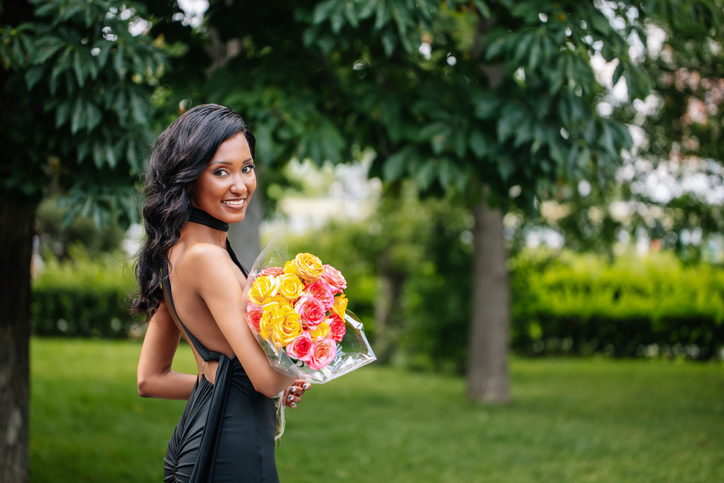
Black proms in the United States are far more than end-of-year dances; they are vibrant, deeply meaningful celebrations that reflect history, identity, and community. While prom season typically arrives in the spring, with most events held in April or May, Black proms stand apart for their scale, style, and cultural significance. From elaborate gowns and tailored suits to community-wide send-offs, these events are intentional, expressive, and rooted in something much larger than a single night.
Proms are a coming-of-age ritual for Black teens.
At their core, Black proms often function as a universal coming-of-age ritual. In cultures where milestones such as quinceañeras or bar mitzvahs formally mark the transition into adulthood, many Black American communities have transformed prom into a similarly important rite. It becomes a defining moment that celebrates not only the end of high school but also the beginning of adulthood, independence, and future aspirations, as noted by social media influencer @adivunsolicited.
They uplift not only students but also their villages.
What makes Black proms especially unique is the way they extend beyond the individual into a broader “village” celebration. Events like prom send-offs bring together family members, neighbors, mentors, and local businesses to honor a young person’s journey. These gatherings serve as a public acknowledgment of growth, resilience, and potential. They are not simply parties; they are affirmations of community investment and pride.
This deeper meaning is echoed in personal reflections like those of Shakira King, a West Philadelphia native who attended prom in 2009. Speaking in a 2024 interview with Resolve Philly, she explained that while prom is shared across racial groups, its role can differ significantly. King carefully explains:
“Black rites of passage are often overlooked because they just look like regular things from childhood. But I don’t think people understand how un-“regular” Black childhood is, especially if you live in a particular kind of city and experiencing a particular kind of poverty or trauma or you’re experiencing a certain kind of depression in your city.”
She adds that these celebrations are an “investment in joy,” highlighting their importance as moments that uplift, affirm, and showcase Black achievement.
It’s a celebration against historical exclusion.
The significance of Black proms is also tied to a history of exclusion. Prom culture in the United States dates back to the late 19th and early 20th centuries, originally emerging from elite college traditions modeled after debutante balls. These early events were racially segregated and steeped in social expectations about gender and class. As proms became more widespread in high schools, particularly in the 1920s and then booming in popularity during the 1950s, Black students were often excluded entirely or forced into separate events.
Even after the 1954 Brown v. Board of Education decision outlawed school segregation, many communities resisted integration. Throughout the 1960s and 1970s, some schools held separate proms for Black and white students, while others allowed unofficial, segregated celebrations to persist well into the late 20th century, History notes. In response, Black families and communities created their own proms, spaces where their children could celebrate fully and freely. Today’s elaborate Black prom traditions can be understood, in part, as a continuation of that legacy, a form of cultural expression that stands as both a protest against exclusion and a celebration of progress.
Proms also push back against harmful narratives.
Black proms also push back against harmful societal narratives, including the “adultification” of Black youth, the tendency to view Black children as more mature and less deserving of care or celebration. These events create a space where young people are centered, nurtured, and celebrated as they should be. As Aja D. Reynolds, Assistant Professor of Education at Wayne State University, observed:
“Black girls and their families organize prom send-offs as a ‘thank you’ to the members of their ‘village’ – old and young alike,” she wrote in 2021 for Today@Wayne. Reynolds observed the prom tradition of then-student Danielle Nolen, in Chicago, and saw in real time how her community uplifted her during her special moment.
“I have seen people from all aspects of the prom-goer’s life attend prom send-offs – everyone from teachers and mentors to fellow church members and co-workers. Even after Danielle was chauffeured to the formal prom dance, I stayed behind with her family to enjoy a cookout and line dancing,” she added.
Promos uplift Black businesses.
Another defining feature of Black proms is their role as a showcase for creativity and excellence. Fashion becomes a central form of expression, with many students wearing custom-designed outfits crafted by Black designers and seamstresses. These looks are often bold, intricate, and deeply personal, transforming prom into a runway of cultural pride and artistry while also reinvesting in Black-owned businesses and talent.
This impact on presentation is intentional and meaningful. As Chicago-based dressmaker Suzette Opara explained in a 2018 interview with the Chicago Tribune:
“Black people, we like to look good, we like to shine and present polished. There are not enough occasions for us to do that, so prom has become one. It’s not to be taken lightly.”
Ultimately, Black prom is more than a celebration; it is a statement. It represents pride, resilience, beauty, and joy. It honors history while creating new traditions. And most importantly, it provides a space where young Black individuals are fully seen, celebrated, and uplifted as they step into the next chapter of their lives.
SEE MORE:
Born From Exclusion: The Powerful History Of The Mardi Gras Indians
Fat Tuesday: The Black History Of Mardi Gras
Black Prom Isn't 'Doing Too Much,' It's One Of Our Most Beautiful Traditions was originally published on newsone.com