Everything We Know About The Conflict In Iran

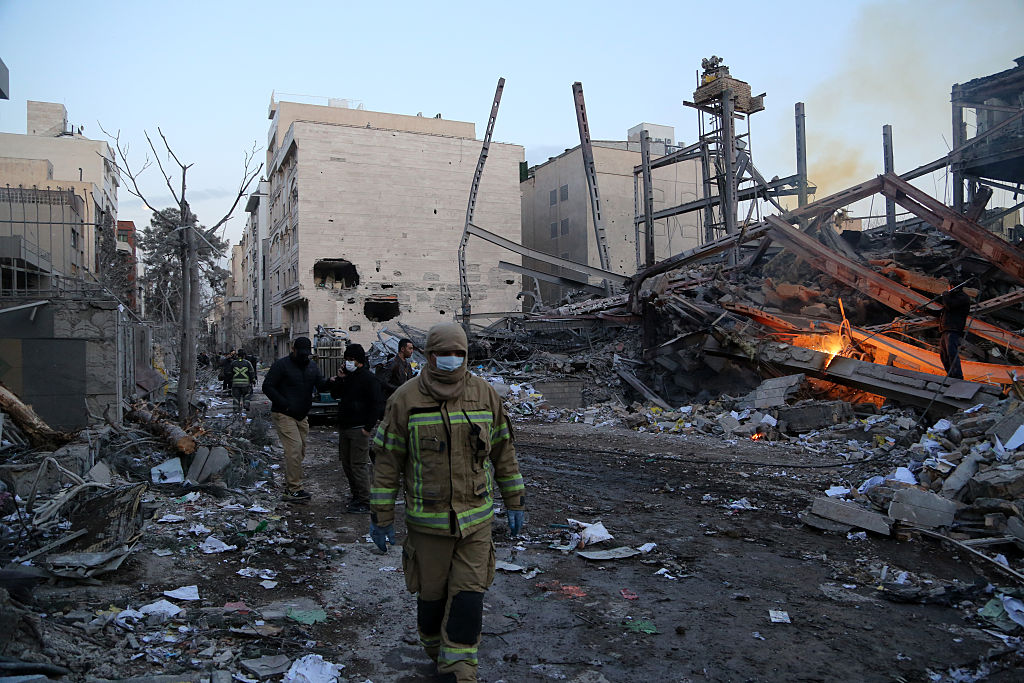
On Saturday, many of us woke up to the news that the United States and Israel launched joint strikes on Iran. This has been a confusing, fast-moving, and continually changing situation that raises plenty of questions. Below you’ll find everything we know about the ongoing conflict in Iran.
Why Did The U.S. Strike Iran?
The Trump administration was in ongoing negotiations with Iran over its efforts to build a nuclear bomb. President Barack Obama already negotiated a nuclear accord with Iran in 2015 before Trump pulled out of it in 2018 during his first term. Before negotiations for a new deal came to a close, CBS News reports that President Donald Trump authorized “Operation Epic Fury” on Friday afternoon. In a Truth Social post, Trump said the strikes were to “ensure that Iran does not obtain a nuclear weapon.”
“We’re going to destroy their missiles and raze their missile industry to the ground. It will be totally again obliterated,” he said in an eight-minute video posted on Truth Social on Saturday morning.
The New York Times reports that Defense Secretary Pete Hegseth held a news conference alongside General Dan Caine on Monday, during which he was evasive about the long-term goals of Operation Epic Fury. Hegseth said the primary goals of the operation are to “Destroy Iranian missiles, destroy Iranian missile production, destroy their navy and other security infrastructure, and they will never have nuclear weapons.”
Hegseth added that while this wasn’t “a regime change war,” he noted that “the regime sure did change.” This was in reference to Iranian Supreme Leader Ali Khamenei being among the early casualties of the Saturday strikes.
This is in stark contrast to Israel’s stance, where Prime Minister Benjamin Netanyahu has said that “forging the conditions for the brave Iranian people to remove the yoke of tyranny” is one of the goals of the operation.
There’s also been a lack of clarity or cohesiveness as to what the U.S. hopes to accomplish with the sudden regime change in Iran. Trump has reportedly been in favor of a regime change similar to what was done in Venezuela, a much smaller country with radically different cultural norms. After U.S. military forces forcibly removed Venezuelan President Nicolas Maduro from office, the current regime was allowed to stay in place as long as it followed U.S. directions. “What we did in Venezuela, I think, is the perfect, the perfect scenario,” Trump said on Monday.
Despite advisers informing Trump that what worked in Venezuela cannot work in Iran, he’s still committed to that course of action.
How Extensive Are The Casualties?
Khamenei is not the only Iranian official who’s been killed in the ongoing strikes. So far, the Head of the National Defense Council Ali Shamkhani, Defense Minister Aziz Nasirzadeh, Chief of Iran’s Armed Forces Sayyid Abdolrahim Mousavi, Intelligence Chief Salah Asadi, and Hassan Jabal Amelian, the head of Iran’s advanced weapons program.
Additionally, a strike on a school led to the deaths of 153 Iranian civilians, including children. As strikes continue to bombard Iran, that number will undoubtedly continue to rise.
Four U.S. service members have already been killed in Iran, with General Caine noting that
“We expect to take additional losses.”
What Was Iran’s Response?
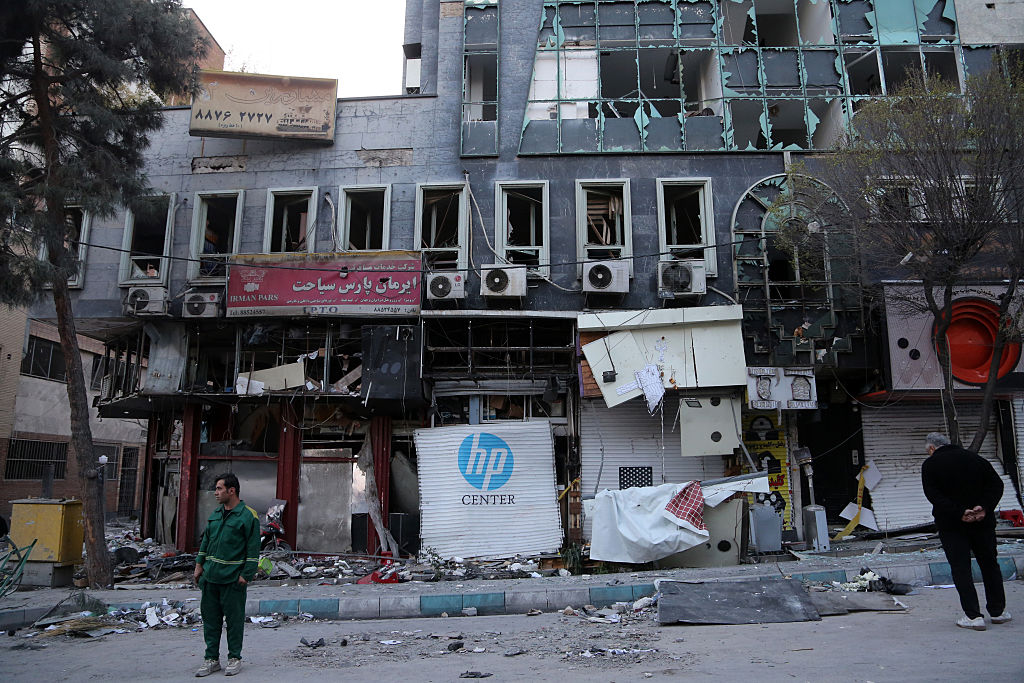
Iran has responded by launching missile strikes at several countries in the Middle East with U.S. military bases. According to BBC News, Qatar, Bahrain, Jordan, the United Arab Emirates, and Kuwait have been targeted, along with Oman and Saudi Arabia. Iran has also launched strikes against Israel, which have killed nine people.
They have since expanded their strikes by targeting key energy sites across the Middle East, according to CNN. David Oxley, chief commodities economist at Capital Economics, told CNN that these strikes could cause the situation to “spiral” and drive “much bigger” moves in energy prices.
How Long Will This Last?
That is the big question, and the Trump administration hasn’t given a straightforward answer. Trump said on Monday that the administration “projected four to five weeks, but we have the capability to go far longer than that. We’ll do it.”
During Monday’s news conference, Hegseth shot down criticism that the United States could potentially be starting another endless war in the Middle East. “This is not Iraq,” Hegseth said. “This is not endless.”
As of now, the operation has been conducted through airstrikes, but there has been very little clarity as to whether or not troops will be deployed to Iran. “I don’t have the yips with respect to boots on the ground — like every president says, ‘There will be no boots on the ground.’ I don’t say it,” Trump said on Monday.
So there ya have it, folks. When I said I wanted the Y2K era come back, I meant through good Halo games, and white boys starting bands instead of podcasts, not the destabilization of yet another Middle Eastern country for vague reasons tied to nonexistent weapons of mass destruction.
SEE ALSO:
New ACA Plans Trump Pitched Could Increase Deductibles By $31K
Everything We Know About The Conflict In Iran was originally published on newsone.com