The 75-Country Visa Freeze Is Also A Hit On HBCUs

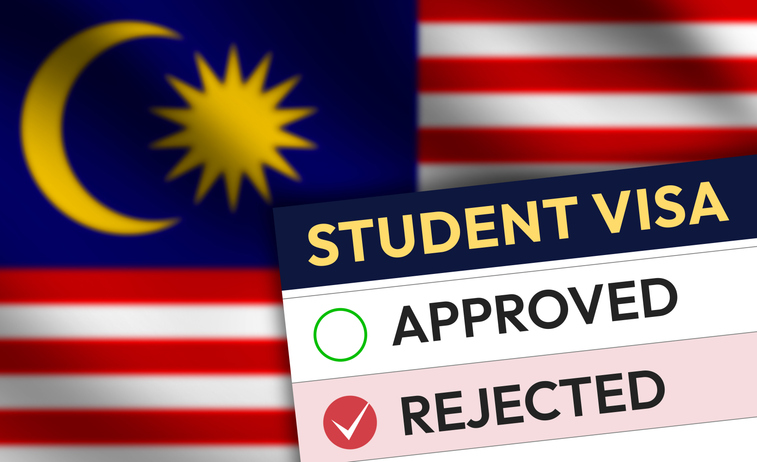
This week, when the Trump administration added 75 countries to a list facing suspended immigrant visa processing, it put HBCUs on the front lines of a policy that now threatens faculty stability, academic continuity, and the survival of entire programs. It means scholars are doing everything right professionally while the government quietly moves to make their futures here legally impossible.
And if you look closely at that list, you can see a pattern that is impossible to miss.
A striking number of the targeted countries are in Africa, the Caribbean, and the Global South: Jamaica, Nigeria, Ghana, Ethiopia, Haiti, Senegal, Cameroon, South Sudan, the Congo, Tanzania, and more. This is not a random listing. It is a policy that lands squarely on Black migration, Black intellectual exchange, and Black institutions. What is being framed as “immigration control” is, in practice, an assault on the global Black academic pipeline, with HBCUs positioned to absorb the damage first.



Faculty on temporary visas are being pushed into legal limbo, and their tenure clocks are colliding with closed immigration doors. Academic departments risk losing the very scholars who anchor curricula, sustain research agendas, and mentor students.
Long before “globalization” became a buzzword, HBCUs were already global Black institutions. Since the early 20th century, they have been magnets for Black students and scholars from across the global diaspora. They are where many first-generation immigrant professors and visiting scholars build careers, train Black American students, and keep global Black knowledge in circulation.
So when visa processing is suspended, the consequences are immediate and concrete. A Nigerian Ph.D. student admitted to an HBCU engineering program may not be able to arrive. A Jamaican historian who offered a tenure-track position may not be able to finalize permanent residency. A Haitian scholar on a temporary visa may be trapped in legal limbo—afraid to travel, afraid to renew, afraid to plan a life.
And this instability hits HBCUs harder than it hits predominantly white institutions. HBCUs do not have billion-dollar endowments to absorb disruption. They do not have standing teams of immigration attorneys on permanent retainer. They do not have donor bases that can quietly offset the loss of international tuition, research grants, and faculty recruitment pipelines.
When a large research university loses one international hire, the machine keeps on running. When an HBCU loses one, it can mean the collapse of a program, the shuttering of a research initiative, or the disappearance of a mentorship pipeline for Black students who finally see themselves reflected at the front of the classroom.
And none of this is happening in isolation. This administration is not just targeting immigrants. It is dismantling the infrastructure that has allowed Black institutions to survive and thrive by attacking from multiple directions at once.
On one front, it is choking off international mobility. On another, it is choking off student loan access by attacking repayment plans, forgiveness programs, and the very financing that allows working-class Black students to attend college. On another, it is rolling back civil rights enforcement, DEI funding, and institutional protections. And on another, it is re-legitimizing white nationalist contempt for Black education by recoding it as “anti-elitism,” “anti-woke,” and “undeserving.” These are coordinated battles converging on HBCUs.
Many HBCUs serve high numbers of first-generation students and depend heavily on federal aid. When student-loan access is restricted or politicized, enrollment drops. When enrollment drops, budgets collapse. When budgets collapse, programs close. And the first to be cut are often the very initiatives that connect HBCUs to the world: international partnerships, visiting scholars, study-abroad exchanges, and globally focused research.
Now layer visa suspensions on top of all that.
International students generally pay full tuition. They bring global research networks, collaborations, languages, and intellectual traditions that make HBCUs not only historically Black but globally Black. They are heavily represented in STEM and graduate programs that are already underfunded and understaffed.
Remove international students from the pipeline, and you do not just lose enrollment; you also lose the revenue they generate. You lose intellectual capital, future faculty, and donors. You lose future ambassadors who would have carried the HBCU legacy back to their home countries and across the world.
Many of the countries on this list are among the largest producers of Black international students and future professors in the United States, especially in engineering, medicine, public health, computer science, and the social sciences. These are the very fields HBCUs depend on to build capacity and national standing.
Nigeria is the largest African source of international students in the United States, sending more students to U.S. universities than any other country on the continent, according to the Institute of International Education’s Open Doors data and U.S. Embassy reporting, which shows that over 20,000 Nigerian students were enrolled in the 2023–24 academic year alone.
Ghana, Ethiopia, Jamaica, and Haiti are also major contributors to the U.S. professional workforce, particularly in medicine and higher education. Census and Migration Policy Institute data show that Jamaica, Haiti, and Nigeria are among the top countries of birth for immigrant doctors and nurses, while sub-Saharan African immigrants, including large Ghanaian and Ethiopian populations, are among the most highly educated and professionally concentrated immigrant groups in the country.
Research on Black international students further shows that many from Africa and the Caribbean choose HBCUs because of greater cultural familiarity, racial belonging, and institutional support compared with predominantly white universities, making these campuses key training and professional homes for future Black scholars, clinicians, and educators.
And many HBCU faculty are themselves immigrants or the children of immigrants—on H-1B visas, J-1 visas, or in the middle of green card processes. When immigrant visa processing freezes, it does not just delay paperwork. It delays stability. It delays home ownership and family reunification. It traps people in a state of permanent provisional existence, always one policy shift away from forced departure.
Yet they still show up. They still teach and mentor. They still hold students whose own futures are being destabilized by the same political forces.
This is what slow strangulation looks like. It doesn’t look like tanks on campus or agents in classrooms. It looks like arteries quietly cut: visas, loans, funding streams, civil-rights enforcement, one restriction at a time, one delay at a time, and one “temporary pause” at a time, until institutions built by Black people for Black survival are exhausted by uncertainty and precarity.
The same political movement that attacks “woke education” is now erecting structural barriers that disproportionately damage the institutions that produce Black doctors, lawyers, engineers, journalists, scientists, historians, and policy makers. The same forces that rail against “globalism” are severing the global Black intellectual circuits that HBCUs sit at the center of.
So when Black communities hear “75 countries added to a visa suspension list,” they should hear a warning siren for HBCUs. This is not just about “protecting borders.” It is about who gets trained, who gets credentialed, who gets to circulate, and who gets to build transnational Black power.
HBCUs were born in the shadow of slavery and segregation. They have always had to survive abandonment. But this is the first time the flow of the world into Black education is being deliberately dammed.
Dr. Stacey Patton is an award-winning journalist and author of “Spare The Kids: Why Whupping Children Won’t Save Black America” and the forthcoming “Strung Up: The Lynching of Black Children In Jim Crow America.” Read her Substack here.
SEE ALSO:
What The Trump Admin’s ‘Milk Bill’ Means For Black Children
What Would MLK Say If He Saw This Hot Mess Of A Country Now?
The 75-Country Visa Freeze Is Also A Hit On HBCUs was originally published on newsone.com